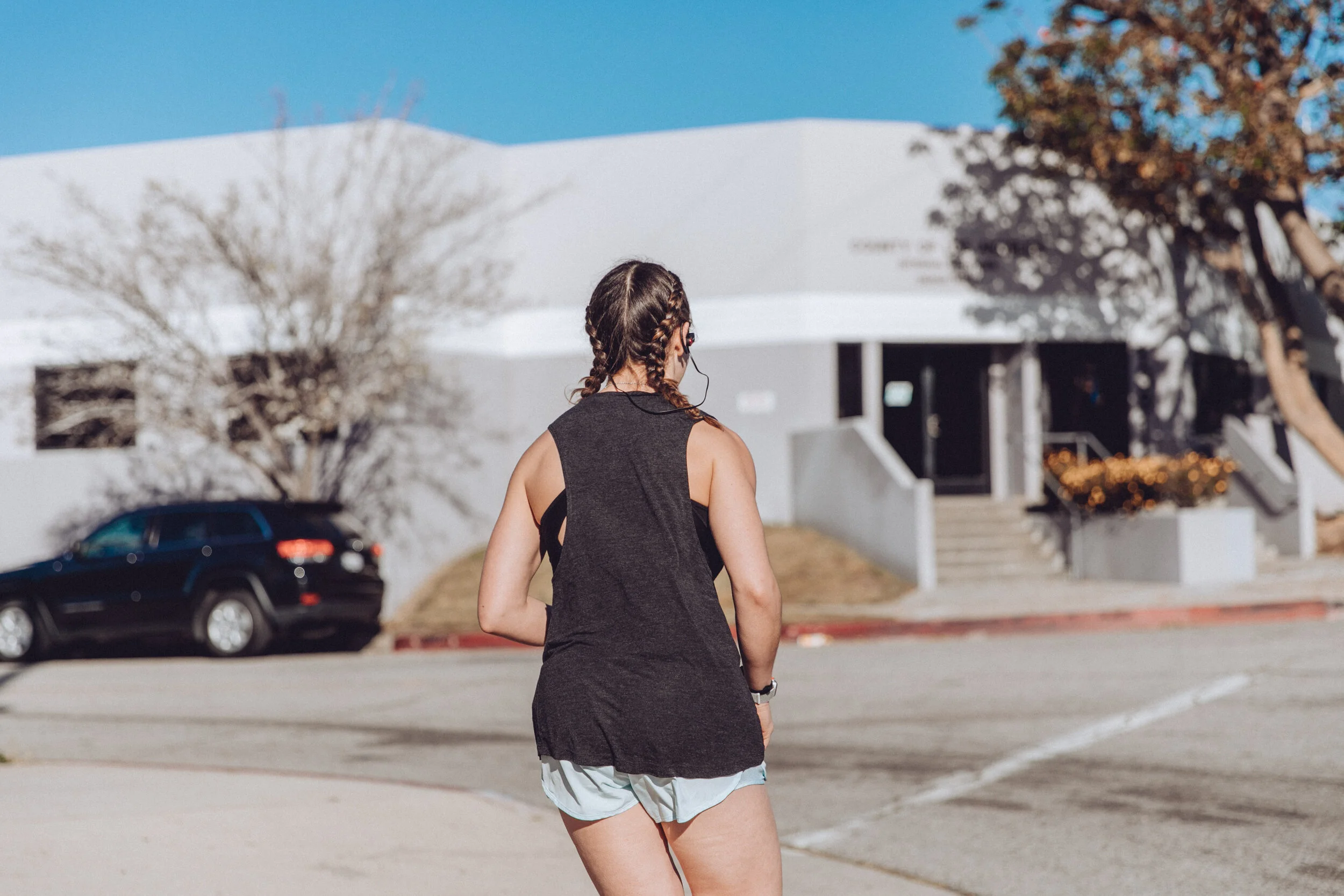
When Bulimia made me a Runner
Bulimia introduced me to running for all the wrong reasons.
Before I begin. I need to express that this blog post could be somewhat triggering for anyone living with an eating disorder. I want to make it very clear that this is merely just my personal experience with bulimia and running, and that running may not be the answer for you in recovering from your eating disorder. Please do seek advice from your GP before using exercise as a means of recovering.
Running was not something I had set out to do in search of “better health”.
Running was not something I had set out to do in search of “clearing my mind”.
Running was not something I should have even been contemplating, given how very ill I was when starting.
You see, when I moved to Oxford, I was still very bulimic. I was starving and bingeing on some fucking whirlwind of a negative “coping strategy” which did not look like coping at all. Not from the inside, and probably not from the outside, either.
When I moved to Oxford to study I was shy. So painfully shy. Socially fucking anxious if I’m being honest with you. I did all that I bloody well could to integrate myself within the realms of drinking and ‘Monday Night Bridge’ and painting a picture of a well put together 19 year old who knew exactly what she was doing. I don’t think I was fooling anyone on the course, and I definitely wasn’t fooling myself.
I developed two very close friendships within my houseshare which helped me find a sense of “home” within Oxford, but those two girls had family that lived so closeby to the city that they would leave every weekend… which inevitably left me to my own devices. Instead of indulging in the culture of such a beautiful place, I found myself indulging in rumination… and with that, indulging in vast, large quantities of food with it. A numbing, if you will, of the intensity of emotion that I felt. I speak more about my experience of bulimia in another blog post.
By this point, I had been bulimic for about 5 years.
I was used to this cycle. I would binge, purge, promise myself I’d do better on Monday (or when the housemates would return), and starve my way through to the weekend again. I couldn’t sustain it, and it was on one of these weekends that my bulimic brain came up with another cunning way to rid myself of the calories being consumed on these binges.
Running.
I didn’t head out with a plan. I honestly didn’t even know what running would feel like. It wasn’t something I had ever really engaged in at school… the sheer thought of going out and doing that one thing terrified me.
I remember considering all the ways my body was going to jiggle and shake and feeling so repulsed by that thought that it drove me to want to run even more.
But then I did it.
And it hurt, and it felt like shit.
Every step of the way, it felt like shit.
I walked, and it felt like shit.
I stopped for water, and it felt like shit.
I tried to break into a run again, and alas, it still felt like shit.
The whole experience totally sucked. Until I got in, and had a shower… and for the first time in a very very very long time I felt something that was not shit.
I felt something entirely new – pride.
This was not a feeling I was familiar with. I genuinely remember standing in that god-awful-in-need-of-a-deep-clean-shower, and feeling pride wash over me. I called my mum and told her I’d been for a run. It sounded like she was proud too.
Pride.
That pride, I carried everywhere with me. That positive feeling that was SO unfamiliar to me, I used as fuel to give the running thing a go again.
I did the same route. A short little way down Cowley Road, down the side street onto a much busier road (that takes you out of Oxford) and into South Park where it was boggy as fuck at the bottom and then had a pretty sizeable climb up to the playground. Usually getting a little overwhelmed by bumping into other humans as I approached said playground so cutting across to the other side of the park and then sometimes crossing the road into the cutest little wooded area.
As time moved on, I’d push beyond the realms of this short circuit that I created for myself. And that pride thing? It just grew stronger and stronger.
And with that pride came a whole bunch of other things that I had never thought would be the very things that would pull me away from the bulimic bitch that resided in my head
Alongside the pride I also found myself…
· An appetite! Like, genuine hunger. I’d been fucking with my ‘satiation’ signals for so long that I forgot what it was like to have a signal from my stomach to my brain that wasn’t being driven by pure upset or a need for numbing
· A sense of identity – I could now see myself beyond my eating disorder. I was more than just bulimic/shy Jess now. I was also “Runner Jess”
· Something to bloody well talk about in social situations – this helped my social anxiety SO much. Whenever things got hairy meeting new people, I found that I could at least talk about running (and how amazing it is) for ages without boring myself
· This one is going to sound corny as fuck, but I found myself a means of self-exploration that I’d never known before. A means of traveling within myself – introspective work to a whole other level. A time to process the utter whirlwind of my teenage years and spend some time getting to really know myself
I can’t say that all of the above stopped me throwing up my food right away. It was, of course, a long long long process.
My best friend Bulimia introduced me to Running, but it was Running that helped me see that Bulimia had never been my friend at all.
End note. I want to remind anyone reading this (again!) that this is merely just my personal experience with bulimia and running, and that running may not be the answer for you in recovering from your eating disorder. Please do seek advice from your GP before using exercise as a means of recovering. If you do want a space to talk about using running as a tool to aid recovery from bulimia I am always happy to chat over email. Jessica@runtalkrun.com - please do reach out for help or seek further support from placed like BEAT if you’re struggling.
10 Ways You Can Support Someone with Bulimia
It can be really hard to know what you should say or how you should act around someone with bulimia. Here are some pointers.
Supporting someone with bulimia is hard.
Supporting someone with bulimia is confusing.
Supporting someone with bulimia is exhausting at times.
It can be really hard to know what you should say or how you should act around someone with bulimia. Should you eat normally? Talk about food at all?
As someone who suffered with bulimia, here are some things I wish I had the strength to tell those supporting me…
ASK THEM HOW THEY ARE DOING
Actually listen to the answer
Ask again if you get “I’m fine”
Keep inviting them to social events, even if it involves food. Try and organise some non-food socials too though
Don’t try and educate them on food/healthy eating. They know what is right and wrong
Don’t talk about your diet
Don’t talk about your own body image concerns
Avoid chat about burning calories - especially post Christmas
Don’t make any assumptions about their illness. Even if they don’t appear to be purging, it could still be bulimia.
LET THEM KNOW YOU ARE THERE FOR THEM. Even if they don’t wanna talk about things right now, let them know you’re there for them WHENEVER they are ready
Supporting someone with bulimia is challenging, and requires some superhuman lovin’. Don’t be afraid if you need to take a step back to look after yourself in the process.
If you’d like to get educated on what it is like to live with bulimia, I’ve written about my own experience with bulimia (and how if affects me today) in a blog post.

Talking to Strangers - Happy To Talk Launch in John Lewis
What is Happy to Talk, and why is it being stocked in John Lewis?
On a very very chilly Wednesday evening this 4th December 2019, I headed to the John Lewis Sloane Square store… not to make a start on Christmas shopping, but to support Chris Zair in sharing the Happy to Talk campaign with JL customers and staff.

I say this so very often, but the best thing Run Talk Run has brought to my world, is the PEOPLE (like Chris and tonight meeting Lisa from Papyrus) who really give a shit about the same things that I do. Who really want to get people talking and supporting each other.
So what is Happy to Talk?
It is a social movement, encouraging people to talk on London’s public transport. Instead of sticking your earphones in and shutting the world out, Happy to Talk is about inviting connection in. It is about acknowledging the people around you, sharing a smile, giving a nod to a passerby. In a world that is so digitally connected, we appear to have lost the art of offline connection. Happy to Talk is the counter to that.
I wrote a post about why it is important to talk to strangers a little while ago, which gives more depth to the HTT campaign.
John Lewis Sloane Square are now stocking the badges to assist us in spreading the word about talking to strangers and creating a more connected London!

IT DOESN’T GET EASIER...
but it is always always always worth speaking in public not just about RTR and what we are doing, supporting our peers on our weekly runs… but actually to talk about my own journey TO creating Run Talk Run in the first place.
My voice cracked and my hands shook this evening as I tried to sputter something coherent about running and talking. Truth be told, I still get very emotional. It all means so much to me. I’ve accepted that this is all part of the public speaking experience for me and I won’t let it stop me continuing to talk.

SO, thank you Happy to Talk for supporting our amazing community. (£2 of every sale of a HTT badge is donated to RTR). You can buy your badge directly through the Happy to Talk website, or in the John Lewis Sloane Square store.
I am a Confidence Coach, and I currently have 1:1 sessions available to book in for 2020. If you would like to ask me any questions about this coaching, feel free to drop me a line. Or you can book in to have some time on the phone with me (for free, obvs).
Useful phrases to say to someone experiencing anxiety
If you are experiencing anxiety, or if you know someone experiencing anxiety, I urge you to give these comments a read.
This morning I posted about the anxiety I was experiencing to my Instagram stories. The anxiety started as a very simple thought - "I don't want to be here" - and quickly spiralled into something quite crippling that had me lying on the grass outside of my flat just focusing on the sky and the trees.
I want to write more about the above at some stage when I feel a little stronger. The number of people experiencing the same trail of thought of not knowing where they want to be was startling.
But for now I just want to share some of the responses that I had landing in my DMs and over Whatsapp that helped me tonnes. Tiny little nuggets of wisdom, and metaphorical twists of words that comforted me so so so much.
Its like trying to complete the same puzzle over and over, but being 100% honest with ourselves we know we don’t have all the pieces.
“The hard thing is to remember there are only ever 7 questions in life; who? What? Where? When? Why? How?
We just go through the list until we can work out something different to add to our ruminating.
The sense of place for you compared to last week or so must be a big change.
Emotions come all at once, and like 7 people all trying to get through a door all at once, it doesn’t work. Our brains have a hissy fit.
It’s tough Jess, but try and find a way to let the emotion pass, then we are calm we can go back and pick things apart, and just like the 7 people , let them through one by one”
It's ok to be scared... It means you're about to do something really brave
We are with you every step of the way
You are strong. And you are brave for sharing how you feel.
This will pass. I sometimes feel the same.
Make your tasks small and prioritise only what you need to get done today
Fancy getting a non-caffeine drink? I'm free if you need a friendly face
Bulimia: my experience, and how it affects me today
A rather candid, honest look at my experience with bulimia. I talk about how it felt when I was under the throes of bulimic thoughts and how it still affects me today.
I remember quite distinctly the first time I made it happen – the first time I purged what I’d eaten.
I’d always had some trouble with feeling “full”. Feeling full, to me, was a reminder that I wasn’t getting myself any closer to my goal of “skinny”.
I don’t want this to make me fat, therefore I shall remove it. It felt logical. Clever. Controlled. No harm done.
Except, therein lied the problem. There was a LOT of harm done. That first encounter with my bathroom toilet at home set the tone for the next five years for me. That was in year 10 as a 14 year old, and I didn’t recover fully from bulimia until I went to Oxford at the age of 19.
It is hard to say where my urges originated. I was always a very shy child (despite my mums’ best efforts at encouraging me to be more social!). This manifested itself into something that looks more like social anxiety as a teenager and I struggled to manage the intensity of my emotions. At the age of 14 I was comparing myself to my (highly competitive) peers at the all girls’ school I was attending. I attributed their extroversion to the fact that they were more 'skinny' than I, and so I started to bring up my food.
After the first experience of putting my head over a toilet, it became habitual. At my lowest, I would throw up everything – breakfast, lunch dinner, the snacks in between. What went in, had to come out. I knew as the food entered my mouth that I would be bringing it back up 5-10 minutes later. I berated myself over my inability to stop myself eating the food in the first place.
I idealised the anorexic mentality and couldn’t understand why I had such little self-control to make myself do that. Of all the things that are ugly about bulimia, I feel that the bitter envy I felt towards some (very poorly) peers was the most hideous of all the symptoms. In hindsight, yes, I see how disordered I was in my thinking to view anorexia as a good thing, something to strive towards… but I have since heard from other recovered bulimics that I was not alone in feeling this resentment.
I felt guilty over my lack of self-control.
I felt guilty for wanting to be “like the anorexics”.
I felt guilty for feeling* fat.
I felt guilty for being a spoilt brat – I mean, who eats to then throw it up? It was wasteful.
*note I say feeling, not being!
Bulimia, I feel, differs from anorexia in the sense that anorexics exert a LOT of control over their food intake, whereas bulimia to me was a complete lack of control. I wouldn’t think twice before putting something into my mouth and I wouldn’t think twice about bringing it back up either.
There were, however, a few elements of control that I put into the mix. I would go through different intensities of bulimia whereby I’d set “rules”. E.g. I would only throw up if the food has carbs, or I would only throw it up if it was a snack, or I would only throw up if the food made me feel “full”. I strongly recall my 30 minute limit that I set too. Purging was entirely ineffective for me if I waited longer than 30 minutes post-eating to try and bring it back up. It created a sense of urgency for me… and by urgency, I mean anxiety. After every meal I’d be clock watching, keeping an eye on my friends to look for the closest opportunity to excuse myself to go to the bathroom.
Physically, I was in so much pain. Aside from the emotional turmoil I was putting myself through, my throat was raw. The acidity of the habitual purging against my throat and mouth was rendering my glands to be open and sore like pain you can’t even imagine. It was around a similar time that I start getting addicted to diet coke – having the bubbles tickle the back of my throat was soothing, and I appreciated the caffeine after a massive dip in my blood sugar levels after throwing up. Other physical side effects that only served to hinder my self-esteem further were the constant spots, and the swollen cheeks I had. Being sick several times a day brings a lot of pressure to the facial area and the “swollen” feeling I also mistook for having a “fat face”.
I remember staring into the bathroom mirror after every episode, seeing bright red cheeks and bloodshot eyes and just feeling the massive wave of shame rush over me. I didn’t recognise myself, I couldn’t understand why I was doing what I was doing. I would stand there for so long sometimes just searching in my eyes for the girl I used to be – the girl that didn’t feel the need to do this. I really felt as though I’d lost every part of who I was. It was exhausting, yet relieving at the same time. As long as I was being sick, I told myself, the food won’t make me fat.
How I managed to stay the “same Jess” in the eyes of my friends at this time, I don’t really know. I was introverted, but silly, and was always cracking jokes. I had such a low self-esteem that self-deprecating humour became the norm for me… it was a way for me to deal with my self-loathing in a way that was actually socially acceptable.
Self-loathing, in itself, was a huge part of the bulimia. I didn’t hate myself, I despised myself. I would absorb every single piece of criticism I heard from absolutely anyone and repeat it over and over and over again until I made sure I hated myself enough for this wrong-doing. Silly things like forgetting my keys to a school locker would play on my mind all day – I would find accusation after accusation to throw at myself to make sure I really believed I was unworthy and unlovable. There was a good deal of rumination at this point in my life too. I used the “absent father” card to punish myself for not being a lovable human… despite the fact that I had two terrific step-dads who love me endlessly and a mum with whom I share a ridiculously close bond with. Yet still, I chose to focus all my attention on the one person who didn’t want me.
It didn’t take me long to become addicted to the feeling of throwing up. Where the process was so normal, sometimes I longed for the feeling of purging even when I hadn’t eaten. I am ashamed to say that, at times, I would eat purely so I could throw up. The process of throwing up felt like I was ridding myself not only of the food, but of everything that was wrong with me from the inside. It was my form of self-harm, my form of punishing myself and feeling relief and getting rid of all the pain that I was holding against myself.
After being sick, I’d feel exhausted. The massive sugar crash I’d get just wiped me out. I’d feel physical pain, but mentally just numb – and that numb feeling was more than welcome after the post-eating anxiety. During these numb phases I would long for a moment to just sit with my earphones in to block out the world. Music was an outlet, and Linkin Park and Staind made me feel less alone in my turmoil. In fact, one of the best songs to have depicted what bulimia felt like to me was “Crawling” by Linkin Park.
HOW DOES THIS AFFECT ME NOW
I am now 90% over my bulimia, though I still struggle with food anxiety at times. One of my biggest triggers is actually supermarkets. I find the task of “choosing what to eat” incredibly stressful if I’m already tired or overwhelmed with other things on my mind. It can be quite panic-inducing in fact, to the point where I’ll often leave the supermarket to let someone else just choose for me.
I don’t like that I still have so much anxiety over food, but I’m glad it doesn’t exist 24/7 as it used to.
Another of my biggest triggers is being around those who talk about nothing but their “dieting” or weight loss. Home can sometimes be a trigger.
HOW TO LOOK OUT FOR SIGNS OF BULIMIA
One of the toughest things I had to contend with as a bulimic is the fact that I wasn’t actually losing any weight from it. (Keep in mind that weight loss and “being skinny” was the main motivator behind all of this). That being said, looking for warning signs of bulimia have to come from elsewhere.
Physical: bloodshot eyes or teary eyes, sore knuckles (yep, another thing constantly in pain), more spotty than usual.
Behavioural: are they disappearing after every meal, or are they anxious around food before/after eating?
Verbal: do they have a problem with feeling full, are they constantly talking about food or weight loss or body image (it’s an obsession), do they have a poor sense of body image, do they often refer to themselves in a negative way?
HOW YOU CAN SUPPORT SOMEONE WITH BULIMIA
Supporting a loved one through bulimia can be so hard. I’ve written a blog post which can help you know the right things to say and do.
End note. I want to remind anyone reading this (again!) that this is merely just my personal experience with bulimia. If you do want a space to talk about bulimia I am always happy to chat over email. You can contact me here – jessicamaryrobson.com. Please do reach out for help or seek further support from placed like BEAT if you’re struggling.
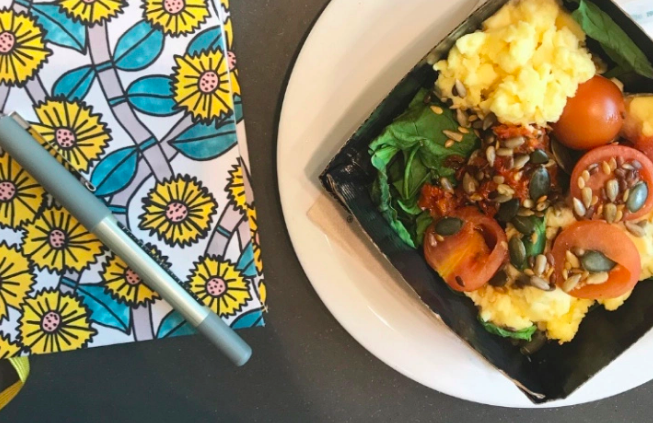
5 reasons we should all journal
I journal every day without fail, and here are my reasons.
Once upon I time I actually felt a great deal of shame around keeping a journal. From the age of around 13 it was a grand secret that I kept hidden in my underwear drawer and in those days it mostly contained musings about how “unfair” things were. How “unfair” it was that I was being sent to bed ALREADY. The not-so-harsh parenting being documented day by day by emotional fury translated into words on paper.
Reading my journal entries back now, from the age of 13-16 it is easy to see that I was already experiencing more hormonal imbalance than was normal. The older I was getting, the more serious my self-esteem started to impact my wellbeing. It brings a tear to my eye to read about the self-harm and I quite simply cannot BELIEVE that it took me so damn long to identify the fact that my depression probably started way earlier than I have acknowledged in the past.
I used journaling back then to articulate my self-hatred and my hatred for the world around me. The “injustice” of it all. It was my opportunity to make sense of my circumstances (which, by the way, were not bad at all – just perceived to be).
I now try to journal just as freely, but with a little more structure. I make a point of noting how I am feeling right in that moment, instead of just documenting the events that have taken place. In fact, if you were to read my journals now, you’d probably have no clue what I even get up to at all. I then try and establish the events that have taken place that may have led to me feeling this way, and my initial thoughts to those events/triggers… I try and establish how and why I have ended up right in this moment, with these feelings.
That works for the positive feelings too. If I’m sat on my lunch break feeling great, I don’t use that as an excuse to not journal. I try and identify why I feel so great. It could be that I’ve had a really productive morning in the office, and that has made me feel competent which makes me feel in control which makes me feel happy. I might be able to attribute it to getting a PB in the gym, which makes me feel strong, which also makes me happy and accomplished. It cuts both ways.
The point is, journaling when I am low is always certain to lift me up a little, or at least gain some clarification on the situation, and journaling when I am already feeling good only serves to make me feel even better. I journal every day without fail for this reason. And all of the reasons below.
Its free and available 24/7
The beauty of journaling is that, minus the relatively small cost of purchasing a notebook and pen, its muuuuuuuch cheaper than therapy! You can jot your thoughts down when it suits you as well, instead of waiting for your appointment with a therapist which might not be for another few days, by which point it may be too late to remember/process exactly what was going through your mind in that moment.
Creativity
Sometimes when I journal it is the most incomprehensible babble of words that don’t even add up to make intelligible sentences. OTHER times, my writing is like poetry. Dramatic, eloquent, and using a much wider range of vocabulary. Although it’s not one that I share with the public, or anyone for that matter, it is still my own little ring-bound creative outlet. The fact that it is personal and private makes that even more special for some reason. Like a hobby only I know about. Except you all know too now. Ok, moving on.
Problem Solving
Through putting my feelings into words and articulating the situation that’s occurring I can sometimes manage to problem solve and get to the root of the issue pretty quickly. This can happen before I’ve even finished putting the pen to paper. I cannot even begin to describe the elation that you feel when you figure your own shit out. Sometimes, we need to stop and look at all the possible reasons why things are unfolding. In the heat of the moment it is easy to be narrow-minded and get carried away with our feelings but journaling allows us to review the situation with better perspective. Example: Jess thought: Oh my goodness I can’t believe Boss X just snapped at me he must think I’m really bad at my job, I knew I wasn’t any good, I’d probably cause less issues if I wasn’t here at all, I don’t know if I can cope with the rest of my workload now (motivation drops)… Jess journaling: So I felt really incompetent earlier because Boss X said this . Oh, but he did tell me he has a funeral to attend tomorrow. Maybe that’s playing on his mind. Ta-dah. Problem solved.
Patterns of Behaviour
Sometimes I’ll notice that I’m writing the exact same “issue feeling” that I wrote about yesterday. Oh and 3 days ago. And a week ago. Crap. If there is a recurring theme with my entries I notice. I notice that I’m writing about the same damn thing and that highlights to me that that is the problem area to be addressed. (Sadly, there are still some thought patterns that I still carry from the age of 13 – shocker – but don’t worry I’m working on those!)
It forces me to take a break
Because I journal on my lunch break, it forces me to step away from the office and work on ME for a solid 40 minutes. There is great power in doing something for yourself and getting a change of scenery means I come back to my desk in the afternoon with a renewed sense of energy. I can clear up anything that bothered me throughout the morning so that it can be at least somewhat dealt with, internally, before I carry on.
Well, this turned out to be quite a chatty/long/waffly post but hopefully I’ve inspired maybe one person to consider using journaling. I hope I have. 🙂